
Youth migration – an interview with psychologist and psychotherapist Liliia Andreieva.

Written by Yeva Mariya Podlevska
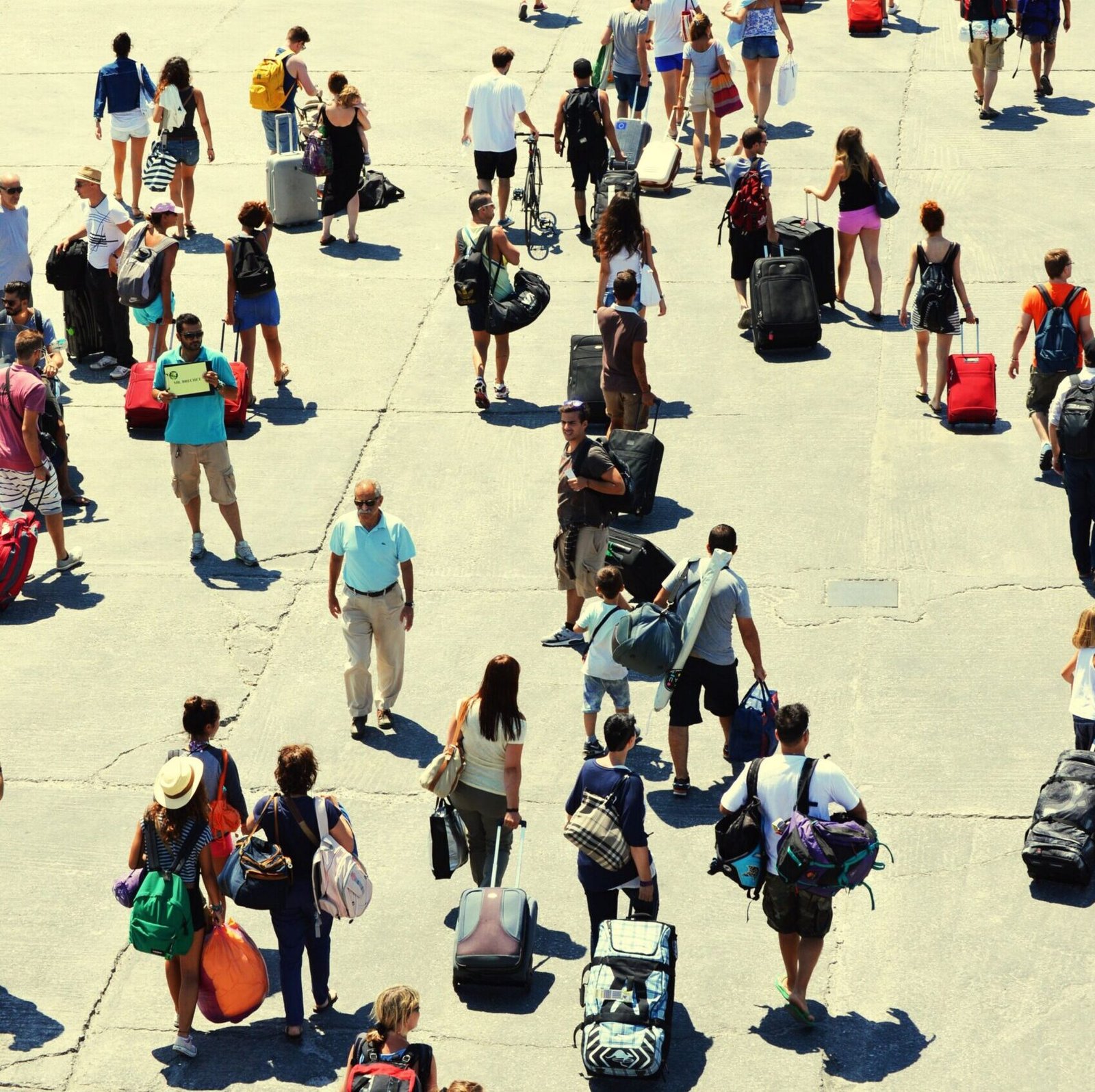
More and more young people are choosing to live outside their home country — whether for study, work or the desire to build a new life in a different environment. Psychologists have begun to study the phenomenon of migration and to explore issues of integration, assimilation and identity. Liliia Andreieva – a psychologist, psychotherapist, supervisor and trainer – discusses this in an interview. Interviewed by Yeva Mariya Podlevska.
1. Good morning, Ms Liliia. Could you tell our readers a few words about yourself?
Hello everyone, my name is Liliia Andreieva, I come from Lviv, and I’ve been living in Kraków for over 10 years. I’m a psychologist, psychotherapist, supervisor, and trainer. At the start of the war in Ukraine, from 2022, I worked and supervised psychologists at the Psychological Support Center for Refugees and Migrants of the Zustricz Foundation in Kraków.
2. Ms Liliia, you haven’t only worked with migrants and helped others work with them – you are a migrant yourself. What was your story of coming to Kraków like?
I always wanted to try living in another country, but when it turned out that my grandmother and my mother’s whole family were from Poland, I decided to try moving here with my family. I chose Kraków because it was very similar to Lviv. I already knew some Polish from my grandmother, but I especially prepared my daughter for the move – when we arrived in Poland she started first grade of primary school, so we still attended a Polish-language kindergarten branch in Lviv.
3. Did these preparations support your experience in working with migrants? If so, how?
Yes, exactly – when I started working with migrants, it was in 2017, and they were teenagers. Even though I had never worked with teenagers before, my colleague and I were the only two Ukrainian-speaking psychologists in Kraków, so I was actually asked to start working with teenagers who had migrated from Ukraine. Unfortunately, we had suicide attempts there, and we had to work very intensively. I believe that the support I provided lay in the fact that they could work with a psychologist in their native language.
Going back to the question – in many interviews I’ve said that there are people who go blindly to another country, thinking that life abroad will be easier. It’s worth asking yourself: why am I leaving, am I running away from something, or am I looking for something new, and why am I doing this.
When I was preparing myself, I learned the language, gathered documents, went through diploma nostrification to understand what work I’d be able to do, what possibilities there were. Of course, I started integrating among my fellow Ukrainians first, and then slowly entered Polish circles, where I was very warmly welcomed. That experience later helped me support people who had come and for whom integrating into Polish society wasn’t so easy.
4. Migration is a change of one’s environment, a change of residence, of one’s home. What is a home to a person?
In my opinion, home is where I feel calm. It’s a difficult question – what is home – because now, after ten years, I know that, for example, it’s hard for older people to migrate; there’s a saying that you don’t transplant an old tree. When I arrived here, I had a feeling that I had returned to the land of my ancestors, so I immediately felt at home. I felt that calm, that this is my land and I want to live here. Young people find it easier to build a home somewhere, because they’re not as attached to a place as the older generation. But home is where you’re welcomed, where you feel calm and warmth. It’s important that there’s no single, universal definition of what home is for a person. For everyone, home has a different value, but it definitely occupies a very important place in every person’s life.
5. If we talk about home itself as our four walls, as the place where we wake up every day, eat breakfast, come back to – what happens when those four walls become different ones? What happens when we move from one home to another? What changes within us?
I work in the Gestalt therapy approach, and we say that we influence the world, and the world influences us – and at that boundary we can carry on a dialogue with the world. I believe that everything – the air, the details, what happens inside the home and outside it – affects us, just as we also have an influence and can change something in that home.
What helps? People often say it’s hard for them when they’re not in their own homes, when they live in rented apartments where they can’t hang their own photos on the walls or change the furniture. And that really does help – I knew a student living in a dormitory in Kraków whose whole wall was covered in photos of his family, and that helped him get through it; it made him feel as if he were with his family.
And again, I’ll say there’s no such thing as a universal meaning of home for everyone. For some, home is simply their country, and it doesn’t matter where exactly they live, as long as it’s in that country. I call my home the apartment where I can paint the walls whatever color I want, buy some dishes, some flowerpots, things like that. Because I like coming home, I like being at home, I like looking at photos, drinking tea, and looking at flowers. So there’s no single universal meaning here – for everyone, home is something different.
6. Do you think people create a home?
Yes, I have no doubt about that, because who else would? Of course we can get a cat or a dog, but it’s we who create a home – home as a country, home as an apartment, home as a family.
7. Let’s move on to the topic of young people. Many young people dream of “flying the nest” to build a new life somewhere. But you can fly the nest and move into the apartment next door, or you can move hundreds of kilometers away. What does that mean?
I agree there are various reasons. One book described migration as a way of choosing a different mother, one who can “nourish” in a different way than one’s own mother did – with the image of the mother as the state. So young people may, in one sense, disagree with the country’s political situation, with socio-economic changes, and so they leave for somewhere that suits them better; on the other hand, there may be family problems, when young people want to fly as far from the nest as possible if there are crises within the family.
Of course, there are also stories where young people left to study or travel somewhere and want to live as far from their family as possible – these are people who have no desire to gather often with family, who want to build something of their own, who don’t want any family influence. It all depends on the family system, on the culture that was established within it.
8. A young person who emigrates is still a person with a young psyche. There’s a difference between when a young person migrates and when a more mature person does. How does this change of residence affect such a young person?
It varies – it depends on the person’s character and on how well they’re able to get used to change. I know people who arrived and adapted and integrated into the new environment from the very first day, who feel like a fish in water. And I also know people who struggle and end up in something that’s very traumatic for them – they fall into aggression, into fear, they start experiencing anxiety states, depression. So it depends on people’s resilience and flexibility in adapting.
It also matters whether the move is voluntary – because, for example, children and teenagers are never voluntary migrants; they are always refugees in a sense, because they have no choice – it’s the parents who choose for them.
Experience shows that successful migration for children and young people depends, among other things, on two factors: whether they are able to, and can be helped to, perceive the new country positively, and whether they have internal and external consent to forming a relationship with that country. This requires, besides accepting the new country, the presence of positive adult role models in their own life story who will support them and help them put down roots.
If we’re talking about a voluntary move by young people, that also varies. Do you know the film “Into the Wild” (dir. Sean Penn, 2008), about a student who traveled alone, left his parents, and died in a bus? It shows that a person may choose to go as far as possible from their family, but in the end can’t cope with it.
We think it will all look so good and nice, then we move somewhere, and we encounter a completely different world than we expected, and then that reality lets us down, overwhelms us. That’s why I would ask people to pay attention to how they prepare for migration, for the journey, or for re-migration. Because we often think we’re moving to a better place, but whether we’ll manage to adapt to that better place depends on each of us individually.
9. A young person arrives in a new country and faces the problem of assimilation. Could you explain what assimilation is, what makes it go well, and what happens if it doesn’t succeed?
Assimilation is a situation where I enter a new culture and adopt it as my own – the language, customs, and so on. It’s also a choice each of us makes. We can choose not to speak our own language at all and not look for people from our own country, and instead enter fully into the world we’ve arrived in.
For assimilation to go well, the most important step is learning the local language. That’s the most important thing, because once we know the language, it becomes easier to fit into society, to study, to look for work. When that doesn’t happen, assimilation fails – the person isn’t able to fully enter the new environment and become “local” there. Without assimilation, a person will feel unhappy, lonely, if they don’t have at least a bit of their own environment. But assimilation is necessary for young people so they can start building a new life in step with the rhythm of the new country.
10. Assimilation is somewhat part of building a new identity. How is that identity built during migration?
This is exactly where we should note that when a person enters a new environment and becomes a migrant, at that moment they in some sense lose their identity. For their own good, and to make entering this new world easier, it’s important that they accept this moment of identity change, because that’s precisely the point at which a new identity begins to form.
Not everyone agrees with this, because we can’t arrive in a new country and completely change it. Of course, we also change that country – by arriving, we bring part of our own culture with us – but we also have to accept the rules of that country. And that’s exactly where the conflict lies, and in that conflict, not everyone is ready for change. If we realize that we’re losing part of our identity and changing it, then that change comes more easily later on.
12. Identity is also national identity – when we say “I’m from Poland, from Ukraine, from France.” Yet many young people say on social media that they don’t know how to describe themselves, that they can’t define themselves as migrants. Why is that?
That also depends on the point in life at which we ask ourselves the question “who am I.” If I go abroad to study and then return to my homeland, I say I’m from the country where I was born. If a person flees their homeland and doesn’t want to return to it, and wants to live, say, in the USA, they may never say they’re from their homeland, but rather that they’re, for example, “from the borderlands,” a cosmopolitan.
It’s interesting that we ask ourselves this question, and it’s worth posing it sometimes, because it also allows us to integrate and assimilate into the new environment. But I would rather ask: why does a person start asking themselves this question, what does it mean for them, what moment in their life is it when suddenly the question appears: who am I, who do I want to be, who am I not?
This also varies – because someone may live in the same country for 10–15 years and suddenly return to their homeland, while someone else may live there for 1–2 years, miss their country, and then that feeling passes, they integrate and do very well in the new country and don’t want to go back. And so we can always ask ourselves this question – what matters is that a person answers it for themselves.
13. From assimilation we move to integration – what is it? Why is good integration important? What happens if it doesn’t succeed?
Integration doesn’t depend only on the person themselves, but also on the environment that receives them. I enter into integration with my own culture, and I want to be accepted as I am, with what I bring, but then I also have respect for the other person’s culture and accept it too – and in our similarities and differences, we connect. That is integration.
If it doesn’t succeed, the person is rejected. So integration means accepting a person, along with their culture, into the new culture.
14. We have immigration, but there’s also the word “re-migration,” although it’s less commonly used in everyday speech. Could you explain what re-migration is?
Re-migration is a subject studied by Professor Halina Grzymała-Moszczyńska of the Jagiellonian University – I once had the pleasure of having a conversation with her on this topic at a migration conference at the university.
Re-migration is a situation where a person, after a long time living abroad, wants to return to their homeland and thinks they’re returning to a place they know very well, understand, where their family, relatives, and friends live. And that’s precisely the moment of a mistaken view of the matter, because we never return to the exact same place we left – because we change during migration, and unfortunately, so does that place. Unfortunately, because we want to return to how things were in childhood, when things were good, but we may instead meet with disappointment.
We may also, paradoxically, not be accepted in that place – “Ah, you left somewhere, and now you’re coming back – why are you coming back here?” So situations can often arise in which we won’t be accepted. And it’s important to notice these problems and talk about them.
15. What if a person reaches a point where they’re unable to find their place anywhere?
That doesn’t depend on the place, but on the person – I’d be curious why that happens. I would gladly talk about that with them in a psychotherapist’s office. It matters, because our earlier experiences shape our decisions, including those related to migration and our image of home. Wherever we go, we always take ourselves with us.
It’s worth understanding why I’m leaving, what I want to achieve in the new country, what doesn’t suit me in my own country, what doesn’t suit me in the new country, where I want to live – that’s also very important. Look not only for the pluses but also the minuses, make yourself a kind of “chart”: what suits me, what doesn’t suit me. The more preparation, the easier the migration.
16. Last question – how can a person migrating help themselves?
You need to look for people – in my opinion, that’s the first form of help for a person. Don’t isolate yourself, don’t be alone, take language courses, find additional hobbies – anything, so as to look for people and build more connections. And of course, if things are difficult, look for psychologists – I especially recommend ones in your native language, because it’s easier to express your emotions and thoughts that way. A person shouldn’t be alone in their life.
17. Would you like to add anything? Is there anything important to point out on this topic?
I’d like to say that there’s nothing wrong with people migrating, but it’s worth thinking it through very carefully and working through the decision: why am I leaving, what for, and what do I want to achieve by doing so.
Related Articles
Related
Migracja młodych – wywiad z psychologiem i psychoterapeutą Liliią Andreievą.
Coraz więcej młodych osób wybiera mieszkać za granicą swojego ojczystego kraju — czy to z powodu nauki, pracy czy chęci budowania nowego życia w innym środowisku. Psycholodzy od dawna badają zjawisko migracji, opisują problem integracji, asymilacji oraz tożsamości. O...
Mechanizmy obronne – jak walczymy z lękiem?
Koncept mechanizmów obronnych pojawił się po raz pierwszy w pracach Sigmunda Freuda i Josefa Breuera, którzy opisali obronę jako mechanizm psychiczny pośredniczący nieświadomie między różnymi sprzecznymi pragnieniami. Freud skupił swoje późniejsze rozważania na walce...
Defence Mechanisms – How Do We Deal With Fear?
The concept of defence mechanisms first appeared in the works of Sigmund Freud and Josef Breuer, who described defence as a psychological mechanism that unconsciously mediates between various conflicting desires. Freud focused his later reflections on the individual’s...