
Why do people lie?

Written by Yeva Mariya Podlevska
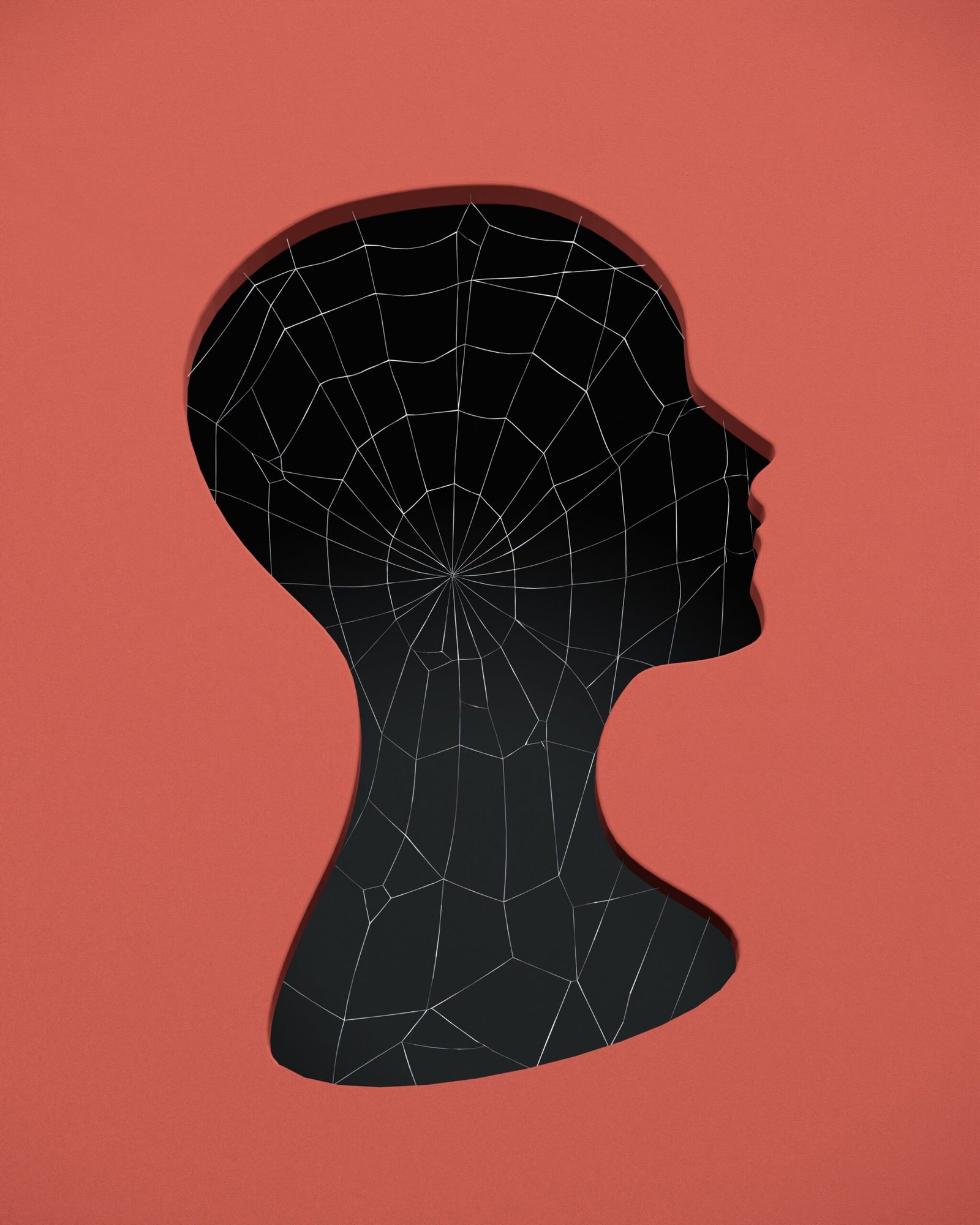
When in “Crime and Punishment”, Raskolnikov said that he didn’t kill Alona and Lizaveta – he lied. He was trying to persuade himself and those around him to believe that his crime was beneficial and that he indeed was a special person who could kill with impunity, as his crime was not a real “crime” but a murder for a higher, better cause. His lies were often sophisticated; however, when mixed with his emotions, they later turned against him. His body and consciousness revealed the truth. Yet, still, Raskolnikov kept lying, and so do we. Thus, we can ask the same questions: why do we lie? How do we rationalise our lies? Can we trick ourselves into believing that our falsehoods are true?
Lying is a natural phenomenon in communication. Research shows that we begin telling lies in preschool, and our ability to tell convincing, realistic lies changes as we grow up and learn how to deceive different people. It shows that as children, we not only learn lies like words – remembering the sentences – but we also learn when we want to give someone false or inaccurate information and why we want to do it. What is even more interesting is the fact that as children we learn when our falsehoods are acceptable and when they are not – when the situation requires us to lie, and when it is safe to tell the truth. Thus, this shows us why we lie.
As Jeffrey T. Hancock and Amy Gonzales write in “Deception in computer-mediated communication”, people lie to enhance or protect their own self-image, their close friend, a relative or some third party, which is described as an altruistic form of lying. Sometimes we lie to avoid punishment or gain something valuable. In other cases, our shame and guilt can provoke us into telling untruthful information. Nonetheless, all of the reasons have one trait in common: lies are ways to accomplish something in the world.
Therefore, if lying can have positive outcomes, why is it associated with moral wrongdoing? Psychologists emphasise our external and internal constraints. One of the most evident and significant constraints is social stigma, which signals fear of getting caught. Cultural norms and social expectations can strongly influence this. If an individual is called a “liar”, he risks the foundations of any future relationship; people don’t trust him, and others might not feel safe cooperating with him anymore – we say that trust is a social resource. Lying can be used as an example in explaining a prisoner’s dilemma. An individual can lie to protect themselves in the moment; however, he jeopardises future chances of being seen as honest, trustworthy or dependable. A rational lie in the moment may not be as reasonable in the long term.

We should also consider situations in which we lie to be kind. When someone asks us if we like their dish, it is frowned upon to say that it is not tasty. Therefore, we say it’s delicious, and everyone is happy. Is this lie harmful? Obviously, we lie with good intentions; we don’t want to harm someone’s feelings, or we want to protect them. Nevertheless, one has to understand that good intentions don’t necessarily mean that a lie will be morally acceptable. Just as a regular lie prevents danger or helps achieve something, a “kind” lie deprives the other person of acquiring possibly helpful information.
Why we lie is the first step in understanding the psychology of lying. But what about rationalising our lies? By telling a lie, we may clearly understand that we are dishonest; however, we might still simultaneously compel ourselves to believe that we had a right to do so. Behind this is a simple need to believe that one is a good person.
Cognitive dissonance is when one’s beliefs contradict one’s actions. One may argue that lying is bad and then tell a lie the next day. In this situation, a tension arises. One understands that one’s action was not consistent with one’s moral perspective. To reduce the tension, one may try to interpret the situation differently; for example, one will say that it was a little lie told for a good cause. Cognitive dissonance shows that we will not always shift our actions to suit our beliefs – we may rather do everything we can to interpret the situation so that it will fit our opinions.
Responsibility is another crucial factor in rationalising our lies. Who is guilty of our lying? Is it really us, or maybe someone provoked us to tell a lie? And if the blame lands on us, so what if it was just one little lie? It didn’t hurt anybody! Shifting blame, hiding possible consequences, and euphemistic labelling are some of the mechanisms of moral disengagement described by Albert Bandura. These mechanisms are tools used by people to stay in their beliefs and opinions while still engaging in behaviour that may contradict their moral standards. Our behaviour doesn’t have to be always right; however, it has to seem acceptable to us.
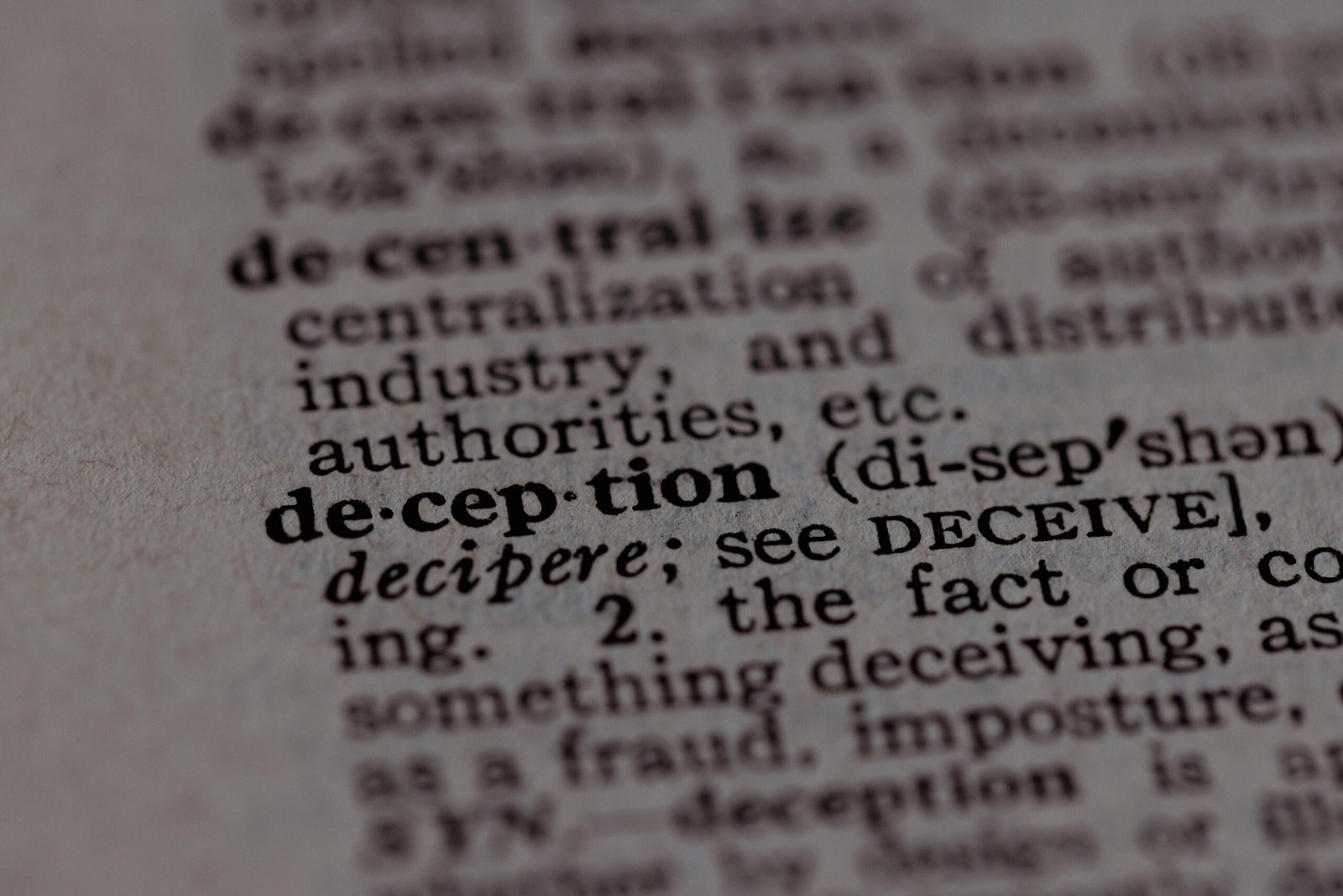
As we have clarified why we lie and how we explain it, there is still one significant factor: self-deception. This phenomenon is also a way of rationalising our lies; however, it is far more complicated. Imagine you got into a fight and afterwards a teacher asks you if you hit your colleague. You lie and say that he was the one who hit you. You are fully aware of the fact that you hit him, and now you’re not telling the truth. However, over time, when people ask you the same question over and over again, and you respond the same way, something can change: you may start to actually believe that it was your colleague who hit you.
The shifts in our interpretation of situations can be provoked by lies. Some are also created by misinformation, which, when later analysed by our brains, can influence the way we recall different situations.
In 2004, Kerri Pickel published a study called “When a lie becomes the truth: the effects of self-generated misinformation on eyewitness memory”. In this research, participants watched footage of a robbery. One group was asked to create false information about a robber, and one week later their memory was tested. The results showed that the group which created a false image of a robber remembered more incorrect details and fewer correct ones.
This study shows that our memory is not a fixed piece of knowledge; it can change with new information that our brain stores. Memories can change as our brain can recall certain events differently and less accurately.
Raskolnikov finally admitted to the murder. However, his lies changed him as a person – for a long time after admitting, he still believed that the murder was a good thing to do. Not only did he lie to others, but he also lied to himself. What is worth highlighting is the fact that lies can potentially affect more than we think they can. The whole process of telling a lie is way more complicated than we think, but the psychology of it is fascinating. So the next time you tell a lie, think about what is happening in that moment inside your head.
Pickel (2004): When a Lie Becomes the Truth: The Effects of Self-Generated Misinformation on Eyewitness Memory. PubMed
Bandura, A. (1999). Moral disengagement in the perpetration of inhumanities.
Levine, E. E., & Lupoli, M. J. (2022). Prosocial Lies: Causes and Consequences.
Deception in computer-mediated communication Jeffrey T. Hancock and Amy Gonzales
Related Articles
Related
Migracja młodych – wywiad z psychologiem i psychoterapeutą Liliią Andreievą.
Coraz więcej młodych osób wybiera mieszkać za granicą swojego ojczystego kraju — czy to z powodu nauki, pracy czy chęci budowania nowego życia w innym środowisku. Psycholodzy od dawna badają zjawisko migracji, opisują problem integracji, asymilacji oraz tożsamości. O...
Youth migration – an interview with psychologist and psychotherapist Liliia Andreieva.
More and more young people are choosing to live outside their home country — whether for study, work or the desire to build a new life in a different environment. Psychologists have begun to study the phenomenon of migration and to explore issues of integration,...
Mechanizmy obronne – jak walczymy z lękiem?
Koncept mechanizmów obronnych pojawił się po raz pierwszy w pracach Sigmunda Freuda i Josefa Breuera, którzy opisali obronę jako mechanizm psychiczny pośredniczący nieświadomie między różnymi sprzecznymi pragnieniami. Freud skupił swoje późniejsze rozważania na walce...