
Defence Mechanisms – How Do We Deal With Fear?

Written by Yeva Mariya Podlevska

The concept of defence mechanisms first appeared in the works of Sigmund Freud and Josef Breuer, who described defence as a psychological mechanism that unconsciously mediates between various conflicting desires. Freud focused his later reflections on the individual’s struggle with their own desires – primarily aggressive or sexual ones – and described these struggles as the basis of defence mechanisms. His daughter, Anna Freud, published “The Ego and the Mechanisms of Defence” in 1936, in which she expanded on her father’s research and presented a classification of ten defence mechanisms. Although this research did not initially attract much attention, particularly amongst academic psychologists, it has been developed in other fields of psychology and continues to be studied to this day. This paper will present the concept of defence mechanisms – what they are, how they arise, and which behaviours can be described using this term.
Sigmund Freud was one of the most famous representatives and the founder of psychoanalysis – a branch of psychology that examines how unconscious aspects of the psyche influence a person’s conscious behaviour. He developed a model of the human psyche consisting of three parts: the id, the ego and the superego. To understand what defence mechanisms are, we must first explore the meaning of these three parts of the psyche.
The most primal and unconscious part of the psyche is the ID. It is present in the human psyche from birth and gives rise to the most primal, reflexive instincts and desires. The ID aims to satisfy needs immediately, regardless of the circumstances or the possible consequences of impulsive behaviour. If a person sees a piece of chocolate, the ID immediately seeks to eat it, regardless of whether the piece can be eaten or not.
Its psychological counterpart is the superego, that is, the part of the psyche which holds all the morals, rules, social expectations, norms and values acquired through parental upbringing, as well as the generally accepted norms of society. The superego is responsible for a person’s ethical side and develops later than the id – during early childhood. Based on the example above, when seeing a piece of chocolate, the superego will respond in opposition to the id’s needs, taking into account all the ethical and moral principles that prohibit eating the chocolate immediately.
The final part of the psyche is the ego. Its main task is to find the most optimal solution to the conflict between the id and the superego. This part is guided by reality; it compares the needs of both conflicting sides and looks for an outcome that could maintain balance within the psyche as well as resolve the conflict between these conflicting needs. In the case of a piece of chocolate, the ego would start looking for ways to satisfy both desires. It would eat the piece of chocolate, for example, after first asking for permission.
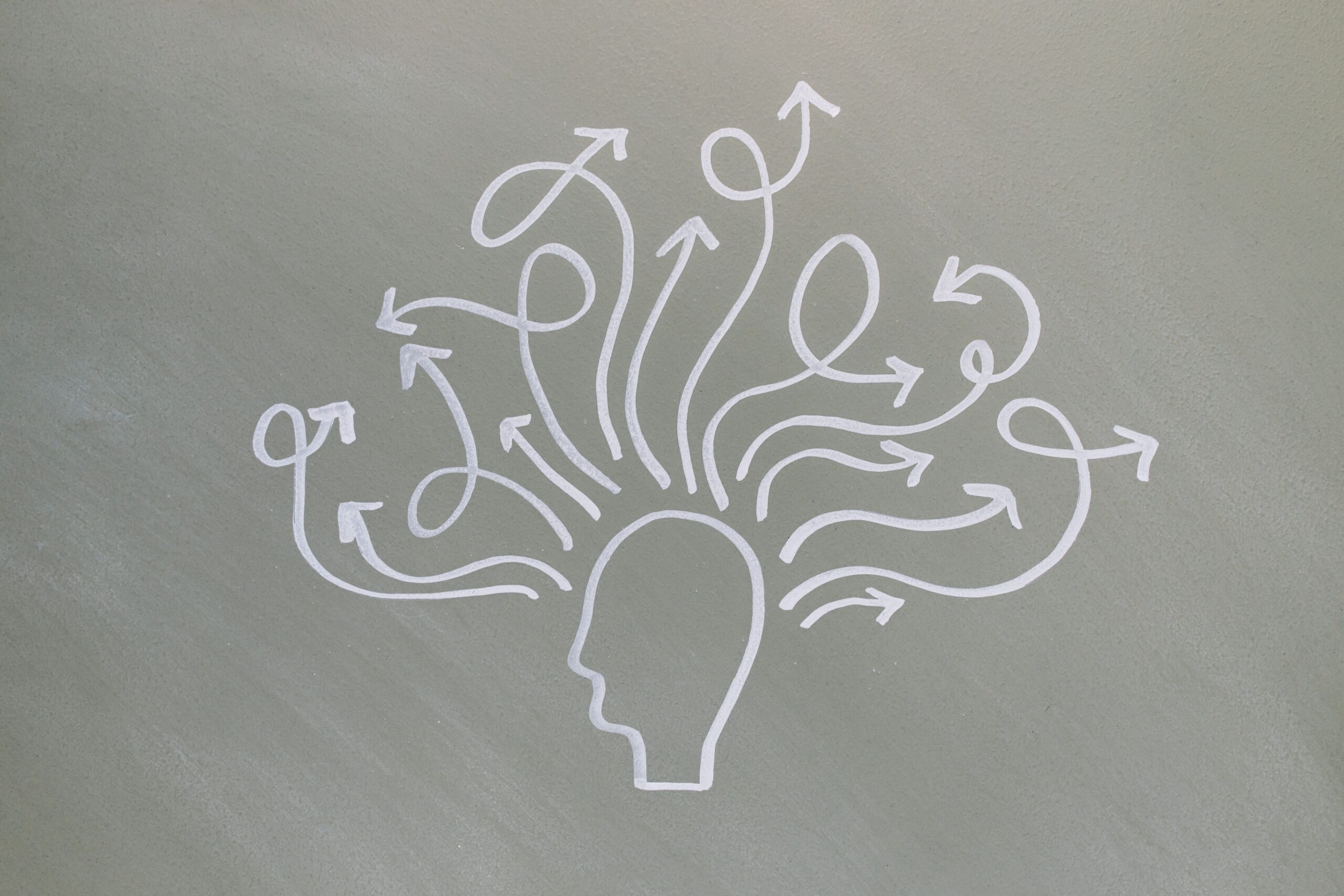
This model of the psyche, as described by Freud, is present in everyone and develops throughout their lives. However, the ongoing conflicts between the id and the superego do not always concern something as simple as a piece of chocolate. Sometimes they touch on aspects that cause the ego intense fear, as it is unable to satisfy both sides. When this fear becomes too intense, the ego uses defence mechanisms.
Defence mechanisms are automatic and unconscious reactions of the mind used by the ego to distort or hide the conflict that has triggered anxiety before it reaches consciousness. The impulse that causes a conflict between the id and the superego is sometimes too strong for the ego to resolve, which triggers fear. In order to protect itself from fear, the ego reaches for defence mechanisms which provide relief but do not resolve the conflict.
For every person, the fear that triggers a defence mechanism can come from various sources. Just as we tend to think of fear as a warning signal, so too does the ego interpret it and, in order to protect itself, employs automatic defence mechanisms. However, the fear from which the ego hides does not come from outside – it is not the fear triggered, for example, by a fire or a car crash – it is a fear originating from within the psyche, which arises when our desires are blocked by social demands, expectations or upbringing. Whereas an external threat triggers a flight-or-fight response in a person, an internal threat within the psyche causes the threat to be concealed from one’s consciousness. When the ego employs defence mechanisms, it does not overcome the problem causing the fear; rather, it transforms and conceals it in such a way as to block the intense fear – which it is unable to cope with – from entering consciousness.
The mind’s most important task is to maintain an inner balance, regardless of which processes remain outside consciousness and which do not. An ego experiencing intense fear is unable to find a logical solution to the conflict – it must act quickly. Often, the impulse that triggers fear is too dangerous to consider consciously, as it threatens a person’s entire sense of who they are. In this case, the idea of the ‘lesser evil’ – a defence mechanism – works better than the ‘greater evil’ of consciously confronting the fear.
In 1936, Anna Freud published a paper in which she presented a list of 10 basic defence mechanisms, which researchers in later years expanded based on new research:
Anna Freud’s 10 basic defence mechanisms:
- REPRESSION – a mechanism that unconsciously pushes a fearful impulse out of consciousness. This may be a thought, a feeling or a memory that causes a conflict between the id and the superego.
- PROJECTION – a mechanism that redirects one’s own feelings or needs onto another person. This is evident, for example, when a person facing a certain flaw in themselves points it out in others.
- DENIAL – a defence mechanism that refuses to accept a reality which causes anxiety and is too difficult to accept.
- DISPLACEMENT – a defence mechanism that redirects a negative impulse towards something or someone other than the true cause, in order to make it easier to confront it.
- REACTION FORMATION – adopting behaviours or feelings that are the opposite of what a person truly feels.
- RATIONALISATION – a mechanism that creates a false explanation for behaviour, the true reason for which is too difficult to accept consciously.
- REGRESSION – a mechanism involving a return to an earlier stage of development in a stressful situation.
- INTELLECTUALISATION – a mechanism involving detachment from feelings and emotions and focusing exclusively on a logical, rational way of viewing situations.
- SUBLIMATION – a mechanism that transforms a socially unacceptable need into an acceptable activity, e.g. physical or intellectual activity.
- SUPPRESSION – a mechanism that consciously sets a problem aside.
Other mechanisms added by later researchers:
- Fantasy – a mechanism that redirects consciousness towards an escape into the imagination rather than conscious action
- Passive aggression – a mechanism that expresses anger indirectly
- Acting out – a mechanism that expresses an impulse through thoughtless action
- Altruism – a mechanism that uses constructive service to others to cope with conflict
- Anticipation – a mechanism that uses realistic planning to make it easier to cope with a future negative experience.
- Humour – a mechanism that uses laughter to cope with a negative experience
- Dissociation – a mechanism that disconnects consciousness from a difficult experience
Defence mechanisms develop throughout a person’s life. In early childhood, a child experiences the first situations that have a negative impact on their psyche. They feel a sense of helplessness for the first time, which forces them to interpret the situation – in this way, the child learns their first ways of coping with stress. When the first warning sign of anxiety appears – that is, an internal alarm forcing the ego to use a defence mechanism – the ego transforms the conflict in such a way as to conceal it from conscious awareness. If a particular defence has successfully reduced and concealed the anxiety within the psyche, that defence mechanism may become automatic and completely unconscious. Therefore, if in the past a certain anxiety-inducing stimulus was suppressed by the psyche, in the future an object similar to that stimulus may trigger anxiety in a person without evoking any memory – the same defence mechanism will operate outside the person’s consciousness.
The ‘lesser evil’ mechanism is evident in most defence mechanisms. It turns out that the ego chooses defence mechanisms in which it experiences negative emotions, such as shame or sadness, rather than feeling anxiety. This shows just how overwhelming and terrifying, for some people, the anxiety caused by the conflict between internal needs and the demands of the environment can be. The ego masks fear with another negative experience that is more easily managed than the fear of conflicting needs.
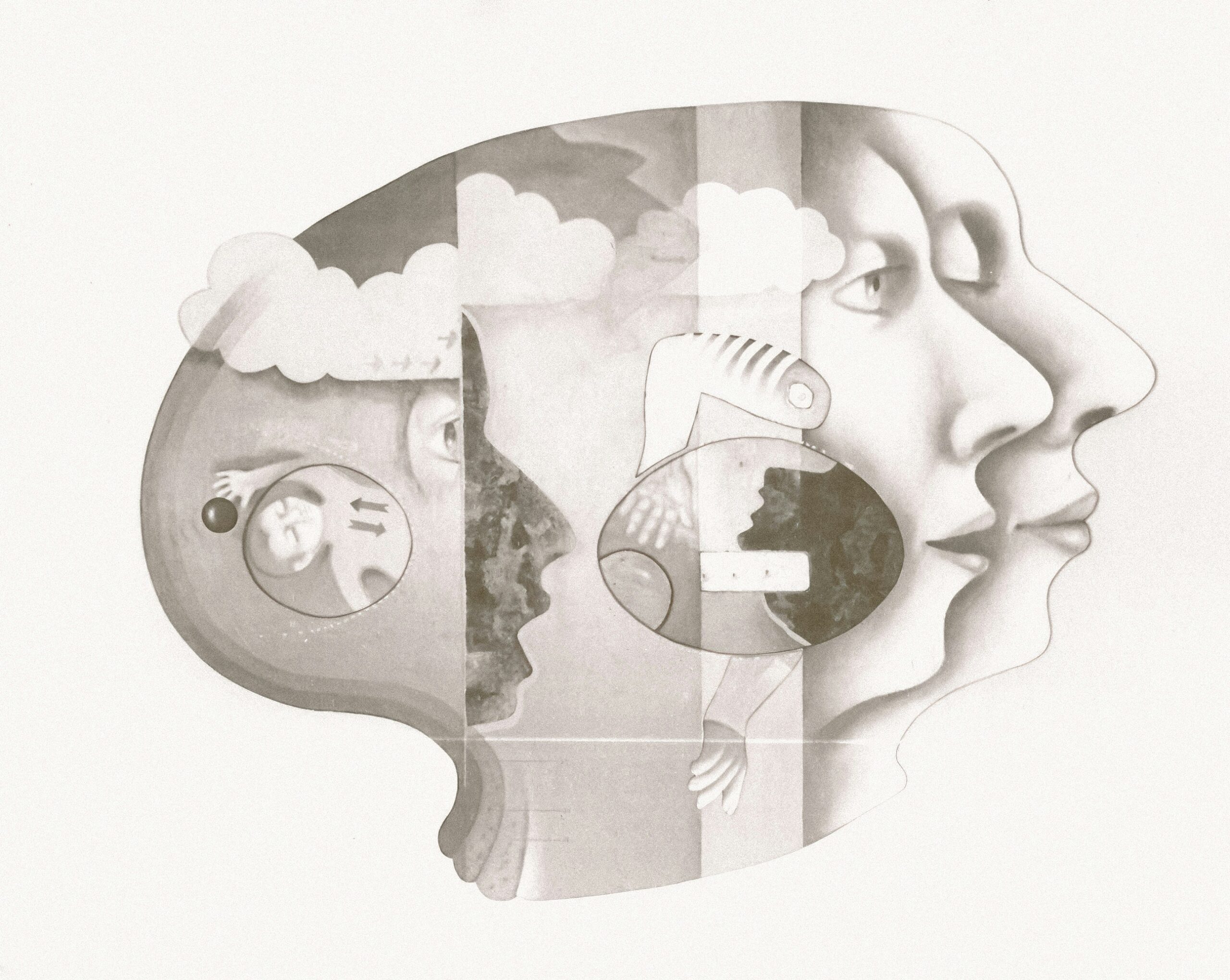
The ego’s choice of a defence mechanism is unconscious. It is not a process in which the ego can rationally decide on an appropriate defence. It is an automatic reaction based on previously established patterns. The type of threat faced by the human psyche determines the defence mechanism. Repression protects against the impulsivity of the id, and denial against external stimuli that threaten the ego. Not everyone’s ego is shaped in the same way. The environment in which it develops has a huge influence on its later reactions – an individual’s personal history and the context of stress form the foundations for the development of defence mechanisms in every person. Early traumas and experiences are just as important as a number of positive experiences. It is worth remembering that, depending on the age and maturity of the ego, its reactions may vary. The defence mechanisms of people during adolescence differ from those used by older people. However, the way in which the ego developed during childhood – the environment and the stimuli it encountered – has a huge impact on the formation of an ‘internal survival’ map and on coping with anxiety.
Depending on the stage of development of an individual’s ego, defence mechanisms will be adapted to that stage. The hierarchy of defence mechanisms was developed by the Harvard psychiatrist George Vaillant, who categorised them into four levels – from the least to the most mature:
George Vaillant’s 4 levels of maturity:
1. Pathological defences – characteristic of individuals with severe mental disorders:
– Psychotic denial – a mechanism that completely denies the truth, detaching oneself from reality
– Delusional projection – a mechanism that projects one’s own internal delusional beliefs onto others, without any connection to reality
2. Immature defences – characteristic mainly of adolescents and individuals with a similar level of ego development:
– Fantasy
– Projection
– Passive aggression
– Acting out
3. Neurotic defences – characteristic of healthy but slightly limited adults
– Intellectualisation
– Reaction formation
– Dissociation
– Displacement
– Repression
4. Mature defences – characteristic of healthy adults; the most mature, often attained through lifelong development
– Altruism
– Anticipation
– Humour
– Sublimation
– Suppression
People continue to develop throughout their lives, as do their defence mechanisms. If, during adolescence, a person has used immature defence mechanisms, this does not mean that they are permanent – over time, as they mature, these mechanisms may evolve into new, healthier ways of expressing fear. These mechanisms should not be feared or suppressed; they are a natural reaction of the body. To improve one’s responses, one needs to work on one’s own patterns of coping with stress. The process by which such a defence system develops is unique to each individual, which is why it is so important to work on one’s psychological reality just as much as on one’s external reality.
Related Articles
Related
Migracja młodych – wywiad z psychologiem i psychoterapeutą Liliią Andreievą.
Coraz więcej młodych osób wybiera mieszkać za granicą swojego ojczystego kraju — czy to z powodu nauki, pracy czy chęci budowania nowego życia w innym środowisku. Psycholodzy od dawna badają zjawisko migracji, opisują problem integracji, asymilacji oraz tożsamości. O...
Youth migration – an interview with psychologist and psychotherapist Liliia Andreieva.
More and more young people are choosing to live outside their home country — whether for study, work or the desire to build a new life in a different environment. Psychologists have begun to study the phenomenon of migration and to explore issues of integration,...
Mechanizmy obronne – jak walczymy z lękiem?
Koncept mechanizmów obronnych pojawił się po raz pierwszy w pracach Sigmunda Freuda i Josefa Breuera, którzy opisali obronę jako mechanizm psychiczny pośredniczący nieświadomie między różnymi sprzecznymi pragnieniami. Freud skupił swoje późniejsze rozważania na walce...